I want to return to that March 1776 deed as I start this posting. But first, I’d like to point to a Revolutionary War service record that I think may well belong to Thomas Whitlock, son of James Whitlock and Agnes Christmas. I have not proven this connection, and want to note this from the outset as I point you to this record.
A Possible Revolutionary Service Record for Thomas Whitlock
The service record of Thomas Whitlock shows that he enlisted on 10 April 1775 in Captain Joseph Spencer’s company of the 7th Virginia Regiment, under the command of Colonel Alexander McClanahan.[3] The service file indicates that Thomas Whitlock was a sergeant in this company. He appears on the muster roll of the company from June through December 1777, with notes that he was sick in September and in the hospital in November. From July 1777 through December 1778, Thomas Whitlock is listed on the company’s pay roll, with notes that he received monthly payments of $8 (he was actually paid £2 8s per month).
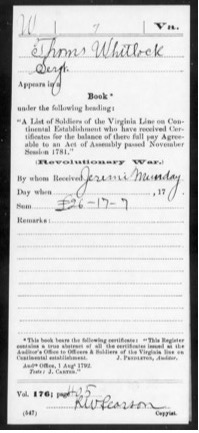
Thomas Whitlock continues on muster rolls of the company from January 1778 until his discharge on 1 May 1778. An undated entry states that Thomas Whitlock received a certificate for the balance of his pay in accord with the act of assembly dated November 1781; the certificate was in the amount of £16 17s and 7d, and was received (apparently on behalf of Thomas Whitlock) by Jeremi Munday. This card in the service packet states that this payment is recorded in Bk. 176, p. 405. I haven’t been able to identify this record. Does the notation refer to the Commissioner’s Books of the Virginia Auditor of Public Accounts? If so, I haven’t noted a book 176.
Jeremiah Munday/Mundy (1760 – 1835) filed affidavits claiming a Revolutionary pension in Lincoln County, North Carolina, on 2 May 1818 and 25 October 1827.[4] His depositions state that he enlisted in the spring of 1779 in Essex County, Virginia, in Captain Thomas Buckner’s company of Colonel William Heth’s detachment of Charles Scott’s brigade of the Continental Army. He was captured at Charleston, South Carolina, in May 1780, and escaped, rejoining the Virginia army at Chesterfield courthouse and serving to October 1780, when he was discharged at Chesterfield. Following the war, he became a Methodist minister in Virginia, and was sent to a ministerial post in North Carolina in 1796.[5]
As I’ve stated, I am not entirely certain that this Revolutionary service record belongs to the Thomas Whitlock (abt. 1745 – May 1830) I’m discussing in this series of postings. But for a variety of reasons, I’m inclined to think it might well be a record pertaining to this Thomas Whitlock. I have not found another Thomas Whitlock in Virginia records of this period to whom I can confidently attach this record. Another Thomas Whitlock made a Revolutionary pension affidavit on 3 September 1832 in Brunswick County, Virginia, stating that he entered a militia unit under Captain James Turner in Halifax County in 1778.[6] This Thomas Whitlock’s pension file shows that he was born in Goochland County, Virginia, in 1756 — so this Thomas is clearly not the son of James Whitlock and Agnes Christmas and did not serve in the 7th Virginia Regiment.
One reason I’m inclined to think that the Revolutionary service record of the Thomas Whitlock who served under Captain Joseph Spencer in the 7th Virginia Regiment belongs to Thomas, son of James and Agnes Christmas Whitlock, is that it can be definitively shown that this Thomas, who settled in Montgomery (later Wythe) County, Virginia, served as a sergeant in a Montgomery County militia company in 1781. On 6 April 1781, Thomas Whitlock of Montgomery County appears as a sergeant in the militia company of Jeremiah Pearce of that county.[7]
With other ancestors who were Revolutionary soldiers, I’ve found that the military rank they held prior to or after their Revolutionary service matches the one given to them when they were in Revolutionary service. For instance, my ancestor Robert Leonard appeared as a sergeant in Captain Alexander Beall’s militia company in Frederick County, Maryland, in 1757-8, then served as a sergeant in Captain Richard Allen’s company in the British 35th Regiment under General Charles Otway before he was discharged in June 1762. He was serving as a sergeant in Maryland’s 7th Regiment when he was killed at the battle of Camden, South Carolina, on 16 August 1780.
Another reason I tend to think that the Revolutionary service record of the Thomas Whitlock who served under Captain Joseph Spencer in the 7th Virginia Regiment perhaps belongs to Thomas, son of James and Agnes Christmas Whitlock, is that this regiment drew men from Albemarle County, Virginia, where I think Thomas likely lived after his father’s estate was settled in 1757 and before he married around 1770. The 7th Virginia Regiment included, in fact, a number of officers from Albemarle County.[8]
Finally, note that Captain Robert Sayers, a neighbor of Thomas Whitlock in Wythe County, Virginia, in whose tithables (i.e., militia) list Thomas is listed in 1784 in Montgomery County, also enlisted in the 7th Virginia Regiment under Alexander McClananan, a point discussed in this subsequent posting. Robert Sayers enlisted in the 7th Virginia from Montgomery County in February 1776. This fact adds considerable weight, it seems to me, that the service record for Sergeant Thomas Whitlock of the 7th Virginia Regiment does, indeed, belong to the Thomas Whitlock who settled in Montgomery County by March 1776.
Note that Sergeant Thomas Whitlocke appears in a list of non-commissioned officers and soldiers of the Virginia continental line compiled at request of the Virginia General Assembly in 1834. This is a list of those qualified for bounty land, who had not received it (A List of the Non-Commissioned Officers and Soldiers of the Virginia Line of the Continental Establishment Whose Names Appear on the Army Register, and Who Have not Received Bounty Land [Richmond: Samuel Shepherd, 1835), p. 51).
1 March 1776 Deed That Is Thomas Whitlock’s First Record in Montgomery County
If the Thomas Whitlock of the Revolutionary service record I’ve been discussing is the man found in Montgomery County, Virginia, records by March 1776, then he may already have been living in Montgomery County at the time he was serving in the 7th Regiment. And now I’d like to return to the 1 March 1776 Montgomery County deed that I discussed in a previous posting, which is, as I’ve noted above, the first clear document I have indicating his whereabouts from November 1757 to March 1776 other than the 26 July 1769 Bedford County, Virginia, court record discussed here, and the statement of the bible of Thomas Brooks and Sarah Whitlock that their daughter Sarah was born in Bedford County on 9 June 1774.[9]
As the posting I linked in the previous paragraph tells you, the deed that Thomas Whitlock witnessed along with others in Montgomery County on 1 March 1776 documents a sale by Jonathan Jennings of Fincastle County to Charles Lynch of Bedford County of 150 acres on the south side of Woods River at the mouth of Reed Island Creek in Montgomery. The land was from a grant to Colonel John Buchanan, whose executor William Preston sold it to Jennings on 7-8 October 1771. Digital images of the deed are at the posting linked in the preceding paragraph. Other witnesses of this deed in addition to Thomas Whitlock were James Callaway, Sarah Pearce, James Newell Jr., and William Sayers.
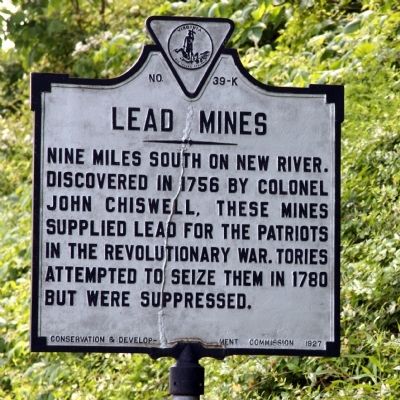
Though the posting discussing this initial document of Thomas Whitlock’s life in Montgomery (later Wythe) County tells you quite a bit about the deed and those mentioned in it, there’s still more to say. The posting I’ve just linked discusses the significance of Charles Lynch (1736 – 1796), noting his family’s ties to Louisa, Albemarle, and Bedford Counties, the counties in which Thomas Whitlock appears also to have lived before coming to Montgomery, and points to his connection to the same Terrell family whose name shows up in Albemarle documents of Thomas Whitlock’s brothers Charles and Nathaniel. My previous discussion of Charles Lynch tells you that in a subsequent posting, I’d say more about Charles Lynch of Bedford and his ties to Wythe County, including his connection to the lead mines operation in Wythe Country founded by Colonel John Chiswell (1710-1768).
Charles Lynch and John Chiswell’s Lead Mines Operation in Montgomery (Wythe) County
As Mary B. Kegley notes, following the death of John Chiswell in 1766, Charles Lynch became superintendent of Chiswell’s lead mine operation.[10] James Callaway, county lieutenant of Bedford County, managed the Wythe County lead mines in 1776-7, and at the end of 1777, the Virginia governor and council appointed Charles Lynch superintendent of the mines, whose operation Lynch began overseeing in 1778.[11] Callaway, who represented Bedford County in the Virginia House of Burgesses, built the first iron furnace south of the James River (see Mary Denham Ackerly and Lula Eastman Jeter Parker, Our Kin: The Genealogies of Some of the Early Eamilies Who Made History in the Founding and Development of Bedford County, Virginia [Lynchburg: Bell, 1930], p. 296).
Note that James Callaway was another of the witnesses to the 1 March 1776 deed of Jonathan Jennings to Charles Lynch of land at the mouth of Reed Island Creek in Montgomery County. At the time Thomas Whitlock witnessed that deed along with James Callaway and others, Callaway was overseeing the lead mines, and Lynch would soon take over their operation, Callaway and Lynch both residing in Bedford County where Thomas Whitlock seems to have lived in 1774 before he made his way to Montgomery County, settling on Little Reed Island Creek in the vicinity of the lead mines.
As we’ll see later, in 1792 Charles Lynch and wife Anne Terrell Lynch sold to James Newell, another of the witnesses to the March 1776 deed, land in Wythe County at which the Austin and Co. ferry operated, along with ferry rights at the lead mines.[12]

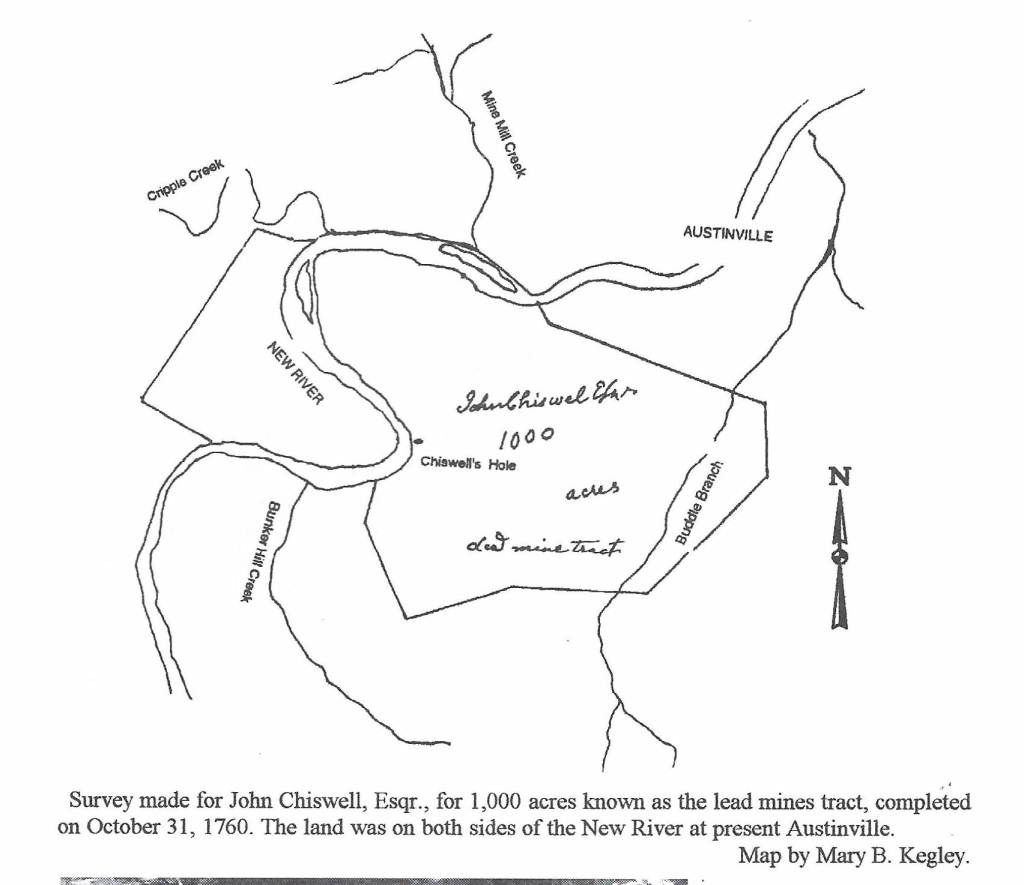
As Kegley notes, it’s clear from an entry that Charles Lynch made in Montgomery County that the land he purchased from Jonathan Jennings in March 1776, with Thomas Whitlock as one of the witnesses to the deed, was in the vicinity of Chiswell’s lead mines. Kegley cites a 20 August 1780 letter of William Christian incorporated into the 1780 Montgomery County entry book, affirming that Charles Lynch had entered 500 acres at the lead mines in the fork between Little Reed Island Creek and New River, adjacent to the land he had previously bought from Jonathan Jennings.[13] Kegley also reproduces a drawing of a survey for 1,400 acres made for Charles Lynch in trust for the lead mines company in 1789.[14]
James Callaway and James Newell (probably Sr.) were linked in Bedford County records before they show up witnessing the March 1776 Montgomery County land sale to Charles Lynch. For instance, when Stephen Hudson sold Barnabas Arthur 100 acres on the north side of Staunton River and lower side of Goose Creek in Bedford on 2 December 1763, James Callaway and James Newell were two of the witnesses to the deed (Bedford County, Virginia, Deed Bk. 2, p. 288). Both men were closely connected to Charles Lynch in Bedford, as well: on 13 September 1764, when Lynch sold Robert Donald acting for the James and Robert Donald Company in Glasgow, Scotland, 3,340 acres on the Staunton and Otter Rivers in Lunenburg County (the deed being recorded in Bedford where Lynch lived), James Callaway witnessed the deed (ibid., p. 466). And on 2 August 1764, when Richard and Roda Doggett sold Charles Lunch a tract in Bedford, James Newell was a witness (ibid., p. 500).
As we begin gathering information about the people mentioned in the March 1776 deed that is the first document we have for Thomas Whitlock in Montgomery County, then, we discover multiple interconnections pointing to a probable connection between Thomas Whitlock and Charles Lynch that perhaps explains Thomas’s choice, having left Bedford County and having settled in Montgomery County by March 1776, to settle near Chiswell’s mining operation. As we’ll see down the road, five years after this 1776 deed, Thomas Whitlock entered 400 acres on Little Reed Island Creek on 2 November 1781, with the land entry stating that Charles Lynch assigned the land to Thomas Whitlock.[15]
John Chiswell
Kegley offers a biographical sketch of John Chiswell, noting that he born in Williamsburg, Virginia, in 1710, and moved to Hanover County when he was eleven years old.[16] In Hanover, Chiswell’s father Charles Chiswell claimed land rich in iron ore and became an authority regarding the smelting industry. In 1736, John Chiswell married into the prestigious Randolph family of Turkey Island: his wife was Elizabeth, daughter of William Randolph. Following his marriage, Chiswell served in the Virginia House of Burgesses.
In the late 1750s, Chiswell’s interest in smelting brought him to the New River area, where he discovered lead deposits. On 6 May 1760, he claimed 1,000 acres on the south side of New River, and by 1761, Chiswell had erected a foundry on his land. In the summer of 1763, he sailed to England to bring Welsh miners from Bristol to work in the mines. The miners worked under the supervision of William Herbert, who figures largely in records involving both Thomas Whitlock and Thomas Brooks, father of Thomas Whitlock’s son-in-law Thomas Brooks.
About 1763, after having returned from England, Chiswell moved to the New River area. On 14 October 1766, John Chiswell died, probably by his own hand, at his house in Williamsburg after having murdered one Robert Routledge at Benjamin Mosby’s tavern in Cumberland County. A trial regarding the murder was proceeding at the time Chiswell died.
John Chiswell’s Hanover County roots are certainly of interest as one examines the life of Thomas Whitlock, since both Thomas’s Whitlock and his Christmas ancestors lived in Hanover County before the Whitlocks begin appearing in Louisa County records after the latter county was formed in 1742 from Hanover. In her book entitled Some Ancient Landowners in Saint Martin’s Parish, Hanover County, Virginia, Norine Campbell Gregory states that the land of the Christmas family in Hanover County was close to if not adjoining John Chiswell’s land.[17]
The day book of John Chiswell’s businesses in Hanover County from the period 1751-7 have survived, but as they have been microfilmed by the Family History Library in Salt Lake City, they are virtually illegible due to bleed-through of ink from one page to another.[18] I’ve gone through these — as best I can — to see if I spot the Christmas or Whitlock surname, but have found no information showing a possible connection between Thomas Whitlock’s Christmas or Whitlock families and Chiswell.
The Witnesses to the 1 March 1776 Deed in Addition to Thomas Whitlock
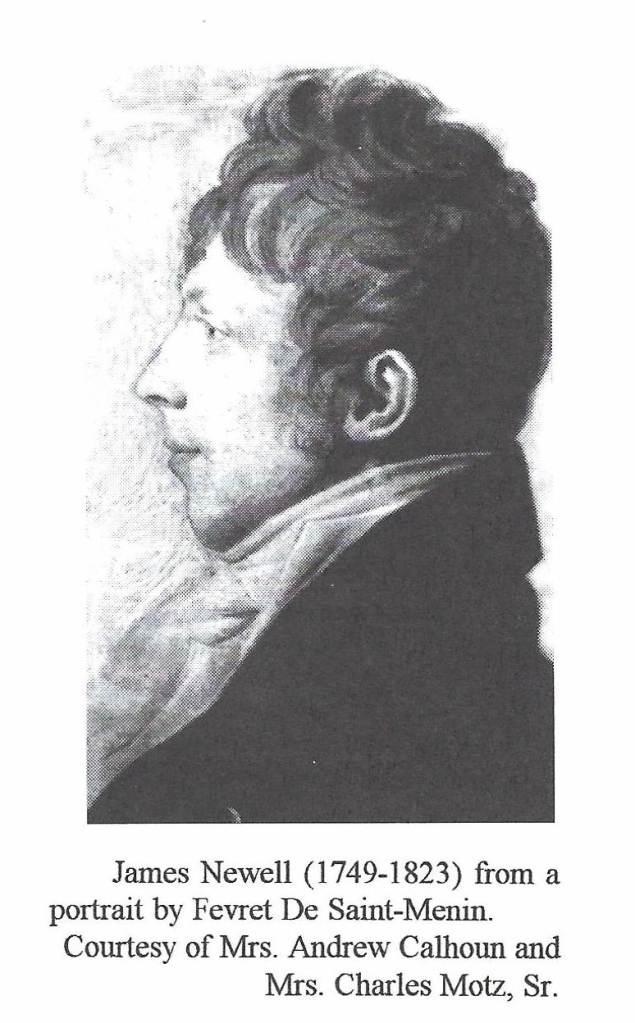
I’ve now discussed James Callaway (the name also appears as Calloway), the Bedford County county lieutenant who was one of the witnesses to the March 1776 Montgomery County deed of Jennings to Lynch, noting his connection to Charles Lynch in superintending the lead mines after John Chiswell died. I’ve also noted that in 1792, Charles Lynch and wife Anne Terrell Lynch sold James Newell Jr., another of the witnesses to this deed, land at the site of a ferry to the lead mines, along with ferry rights.[19] As Kegley states, James Newell Jr. (1749-1823), was “a prominent citizen associated with the lead mines community” who was living by 1771 in the Poplar Camp-Lead Mines neighborhood.[20] Kegley also indicates that the lead mines were eventually leased to Newell.
As to the other witnesses to this deed in addition to Thomas Whitlock — Sarah Pearce and William Sayers: in a previous posting, I noted that we’ve already met the Pearce, Newell, and Sayers families frequently in connection with Thomas Brooks (abt. 1747 – 1805), whose son Thomas (1775-1838) married Sarah Whitlock, daughter of Thomas Whitlock. I cannot positively identify the Sarah Pearce witnessing the March 1776 deed of Jennings to Lynch. It seems clear to me that she is part of the same Pearce or Peirce family to which David Pearce/Peirce belonged. A previous posting offers a biographical snapshot of David Pearce/Peirce (1756-1833), noting his ownership of the Poplar Camp furnace.
Kegley indicates that William Sayers (1728 – 1781) came with his brother Alexander Sayers to the western waters of the New River area by 1750, and by 1752 had settled on Reed Creek.[21] Alexander had ties to Bedford County. The Sayers family is, as Kegley shows, connected by marriage to the Crockett family of Wythe County: William Sayers married as his first wife Esther Thompson Crockett, widow of Samuel Crockett, a family also connected by marriage to the Davies family into which Thomas Whitlock’s son Charles married when he married Mary Davies, daughter of Henry Davies and Jane Crockett.
So in conclusion: one deed, the first document I find for Thomas Whitlock in Montgomery (later Wythe) County, Virginia, is chock full of valuable information that suggests tantalizing connections to people living in Bedford County, where the bible register of his daughter Sarah and her husband Thomas Brooks places Thomas Whitlock in 1774, and to the lead mines operation near which Thomas Whitlock settled in Montgomery County. And the connection to Charles Lynch of Bedford County points back to Louisa County, where Thomas was born, and to Albemarle County, where Thomas’s brother Charles had settled by 1760 and where Thomas lived with his brother Charles — I think — until he came of age and married.
In my next postings, I’ll share the rather extensive documentation I have for Thomas Whitlock in his years of residence in Montgomery — and, after 1790, Wythe — County from 1776 up to 1805.
[1] Louisa County, Virginia, Inventory Bk. 1743-1790, pp. 39-40.
[2] Montgomery County, Virginia, Deed Bk. A, pp. 160-2.
[3] NARA, Compiled Service Records of Soldiers Who Served in the American Army During the Revolutionary War, Virginia, 7th Regiment, #2577, RG 93, available digitally at Fold3.
[4] NARA, Revolutionary War Pension and Bounty-Land Warrant Application Files, W2606, RG 15, available digitally at Fold3.
[5] See the October 2013 application of Lincoln County, North Carolina, Historical Society for a historical landmark designation for the Mundy house of Denver, North Carolina, online at the website of Lincoln County, North Carolina, county government offices.
[6] NARA, Revolutionary War Pension and Bounty-Land Warrant Application Files, S16020, RG 15, available digitally at Fold3.
[7] Charles W. Crush, Montgomery County, Virginia: The First Hundred Years (Athens, Georgia: Iberian, 1994), p. 96.
[8] See FamilySearch research wiki “7th Virginia Regiment (Revolutionary War).”
[9] On the March 1776 Montgomery County deed, see supra, n. 2.
[10] Mary B. Kegley, Early Adventurers on the Western Waters, vol. 1 (Orange, Virginia: Green, 1980), p. 143, citing Lyman Draper, The Preston and Virginia Papers of the Draper Collection of Manuscripts (Madison: State Historical Society of Wisconsin, 5QQ, 54, 58; Early Adventurers on the Western Waters, vol. 3 (Wytheville: Kegley Books, 1995), pp. 219, 222, 275, citing Lead Mines Papers held by the Virginia State Library, and Chiswell Judgments, Wythe County circuit court box 32 (1827). See also Kegley, Wythe County, Virginia, a Bicentennial History (Wytheville: Wythe County Board of Supervisors, 1989), p. 329-333.
[11] See Gordon Godfrey Fralin, “Charles Lynch: Originator of the Term ‘Lynch Law,’” unpublished master’s thesis, University of Richmond, 1955), pp. 37-9, citing Journal of Virginia Council of State, vol. 1, p. 74.
[12] Kegley, Early Adventurers on the Western Waters, vol. 2 (Orange, Virginia: Green, 1982), pp. 226-7, and vol. 3, p. 221, citing Wythe County, Virginia, Deed Bk. 1, p. 139.
[13] Kegley, Early Adventurers, vol. 2, p. 24, transcribing Montgomery Entry Bk. 1780, p. 4; and Early Adventurers vol. 3, p. 275.
[14] See Early Adventurers, vol. 3, p. 230, citing Montgomery County, Virginia, Survey Bk. D, 1789; and ibid., pp. 352-4.
[15] Early Adventurers, vol. 2, pp. 28, 104, citing Montgomery County, Virginia, Entry Bk. 1781, p. 19, and Record of Certificates of Commissioner of Washington and Montgomery Counties, Virginia, 1767-1788, p. 40.
[16] Early Adventurers, vol. 3, pp. 249-253. See also Malcolm H. Harris, History of Louisa County, Virginia (Richmond: Dietz, 1936), pp. 8-11, on the Hanover County roots of John Chiswell.
[17] Norine Campbell Gregory, Some Ancient Landowners in Saint Martin’s Parish, Hanover County, Virginia (Athens, Georgia: New Papyrus, 2001), p. 124.
[18] Colonel John Chiswell’s Day Book and Abstract (1751-1757), from Frederick’s Hall Plantation Books papers, Hanover, Louisa, and York Counties, Virginia, US/Canada film 1760195; in Kenneth M. Stampp, ed., Records of Ante-Bellum Southern Plantations from the Revolution Through the Civil War, Series J: Selections from the Southern Historical Collection, Part 9: Virginia (University Publications of America, 1996). These documents are held by the Wilson Special Collections Library of University of North Carolina at Chapel Hill, collection 01422, Frederick’s Hall Plantation Ledgers and Other Volumes, 1727-1862, 1981.
[19] See supra, n. 12.
[20] Kegley, Early Adventurers, vol. 3, pp. 316-323.
[21] Ibid., vol. 2, pp. 376-7, 400-3.
 BEGATS AND BEQUEATHALS
4 thoughts on “Thomas Whitlock (abt. 1745 – 1830) of Louisa and Wythe Counties, Virginia, and Cumberland County, Kentucky: First Appearance in Montgomery County, March 1776”