The Indenture Document
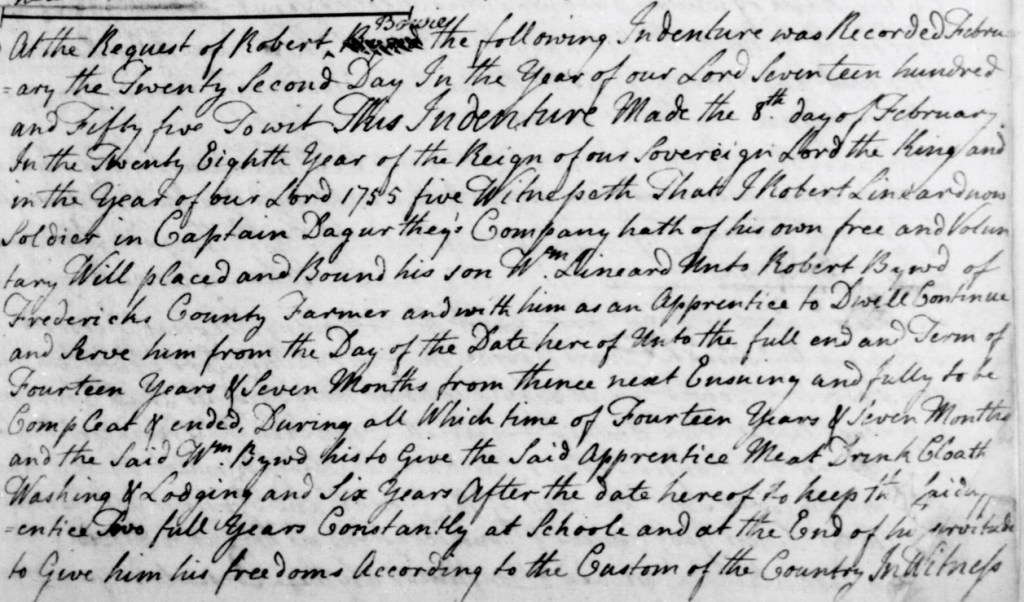
Robert Leonard’s February 1755 indenture of his son William reads as follows:
At the Request of Robert Byard Bowie the following Indenture was Recorded February the Twenty Second Day In the Year of our Lord Seventeen hundred and Fifty five To wit This Indenture made the 8th day of February In the Twenty Eighth Year of the Reign of our Sovereign Lord the King and in the Year of our Lord 1755 five Witneſseth that I Robert Lineard now Soldier in Captain Dagurthey’s Company hath of his own free and Voluntary Will placed and Bound his son Wm. Lineard unto Robert Byard of Frederick County Farmer and with him as an apprentice to Dwell Continue and Serve him from the Day of the Date hereof Unto the full end and Term of Fourteen Years & Seven Months from thence next Ensuing and fully to be Compleat & ended. During all which time of Fourteen Years & Seven Months and the said Wm. Byard his to give the Said Apprentice Meat Drink Cloath Washing & Lodging and Six Years After the date hereof to keep the Said Apprentice Two full Years Constantly at Schoole and at the End of his servitude to Give him his freedoms According to the Custom of the Country In Witneſs Whereof We have hereunto set our hands & Seals the day and Year Above Written
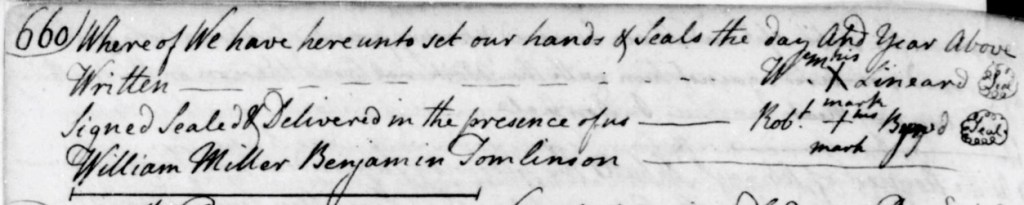
Wm. Lineard (his mark)
Robt. Byard (his mark)
Signed Sealed & Delivered in the presence of us
William Miller Benjamin Tomlinson
Note the following:
• Robert Leonard states that he was a soldier serving under Captain “Dagurthey” — i.e., under John Dagworthy.
• We know that Dagworthy was at Fort Cumberland in Frederick County in 1755, so this indenture document places Robert Leonard as a soldier at that fort. His military career had already begun by February 1755.
• The indenture states that William Lineard was Robert Lineard’s son. It does not give William’s age. As I’ve stated previously, it was not unheard of in this time and place for parents to apprentice out a child as young as six or seven years of age. The indenture document specifies that Robert was indenturing his son William for fourteen years and seven months. When minors were indentured in Maryland at this period, the limit of indenture was usually their 21st birthday. If the indenture period is an indicator of William’s age at the time Robert indentured him, he would have been six years and five months old in February 1755, and therefore born in September 1748.
• The indenture document does not state why Robert was indenturing this son to Robert or William Byard/Bowie. It states that six years after February 1755, Byard/Bowie was to provide two years of schooling for William Leonard.
• Note the discrepancies with the name of the Frederick County farmer to whom William Leonard is apprenticed: the surname Byard is inked out at the start of the document and Bowie written in its place. At one point the indenture document gives Byard’s Christian name as William. Otherwise, it appears as Robert. The signature of Robt. Byard again seems to have the surname itself inked out.
• I have not been able to find a Robert Byard or Bayard or a Robert Bowie in Frederick County records at this time. It’s possible that Benjamin Tomlinson, who was one of the two witnesses, is connected to a Tomlinson family that lived on Will’s Creek near Fort Cumberland from an early date.[2]
John Dagworthy and Fort Cumberland
John Dagworthy was born 30 March 1721 at Trenton, New Jersey, the son of an older John Dagworthy and Sarah Ely. He died 1 May 1784 in Sussex County, Delaware. On 20 October 1774, he married Martha, daughter of Thomas Cadwallader and Hannah Lambert and sister of General John Cadwallader.[3] In 1746, when New Jersey raised a regiment of five hundred men for King George’s War, the colony’s Council appointed Dagworthy captain of one of the companies in this regiment and his company went to Albany, New York, in September 1746 along with Pennsylvania troops to participate in an expedition against Canada that never actually took place.[4]
Dagworthy raised his own company for this expedition, and then voyaged to England to seek the Crown’s support for the military venture and was given a royal commission. After his return to the colonies with this commission, in September 1753 he was stationed at Fort Cumberland in command of two companies of rangers organized to defend and protect the frontier settlements of western Maryland. On 2 September 1754, Maryland governor Horatio Sharpe wrote Lord Baltimore stating that he had made provision to defend the colony against the French and Indians, and saying,[5]
I have given the command thereof to one Capt. Dagworthy, a gentleman born in the Jerseys, who commanded a company raised in that province for the Canada Expedition, since the miscarriage of which he has resided in this province upon an estate which he purchased in Worcester County.
In another letter to Baltimore, Sharpe praised Dagworthy and “especially his ability during the past summer to exist with his command without food,” adding that “he could no doubt be able to pass through the winter without shelter.”[6]
As Friends of Fort Frederick note,[7]
As early as August 1754 we know that the colony would “cloath” “the companies of men to be raised in this province.” Sharpe related that right after receiving funds to raise troops he “proceeded to form a company cloath & accoutre them….” In June 1755 Sharpe reports that Dagworthy’s company received 57 suits of clothes. Based on this we can safely say that these were uniforms.
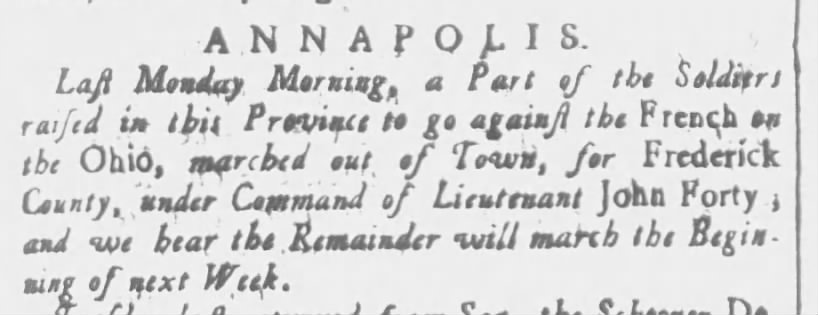
In September 1754, fifty to sixty men were raised for Captain Dagworthy’s company and marched to Fort Mount Pleasant (later Fort Cumberland), and a fort was built on Wills Creek in what was then Frederick but is now Allegany County in September and October.[8] On 26 September 1754, the Maryland Gazette reported,[9]
Laſt Monday Morning, a Part of the Soldiers raiſed in this Province to go againſt the French on the Ohio, marched out of Town, for Frederick County, under Command of Lieutenant John Forty; and we hear the Remainder will march the Beginning of next Week.
On 3 October 1754, the Maryland Gazette announced that a second party of Dagworthy’s soldiers had marched from Annapolis under command of Lieutenant John Bacon to join the other soldiers in Frederick County.[10]
As Reuben Pownall Ely notes, it was while Dagworthy was in command of Fort Cumberland that his long dispute with George Washington, which I discussed in a previous posting, began. Washington had been commissioned a colonel of colonial troops and commander-in-chief of Virginia forces. Dagworthy was a captain, but held a royal commission and considered himself Washington’s superior as a result. As Jared Sparke states,[11]
At Fort Cumberland was a Captain Dagworthy, commissioned by Governor Sharpe, who had under him a small company of Maryland troops. This person had held a royal commission in the last war, upon which he now plumed himself, refusing obedience to any provincial officer, however high in rank. Hence, whenever Colonel Washington was at Fort Cumberland, the Maryland captain would pay no regard to his orders.
In an article providing a roster of Maryland troops in the French and Indian War, Maryland Historical Magazine adds (with no author’s name stated) that, though Fort Cumberland was a royal fort, it had been built by Virginians on Maryland soil, and this historical background also likely played into the pique between Dagworthy and Washington.[12] As Patrick H. Stakem notes, when Dagworthy refused to take orders from Washington at Fort Cumberland, Washington appealed to Virginia governor Dinwiddie, who refused to intervene, stating that Fort Cumberland was in Maryland and outside his jurisdiction.[13]
On 8 December 1754, it was reported that Dagworthy had forty-seven men garrisoned at Fort Cumberland prior to Braddock’s disastrous expedition in the summer of the following year that precipitated the decision of the Maryland Assembly to see Fort Frederick constructed.[14] Note that with this December 1754 date, we’re arrived chronologically right on the eve of February 1755 when Robert Leonard indentured his son William in Frederick County, stating that he was a soldier under Captain Dagworthy. Since Fort Frederick had not yet been constructed in 1755, that document strongly suggests that Robert was stationed at Fort Cumberland when he indentured son William.
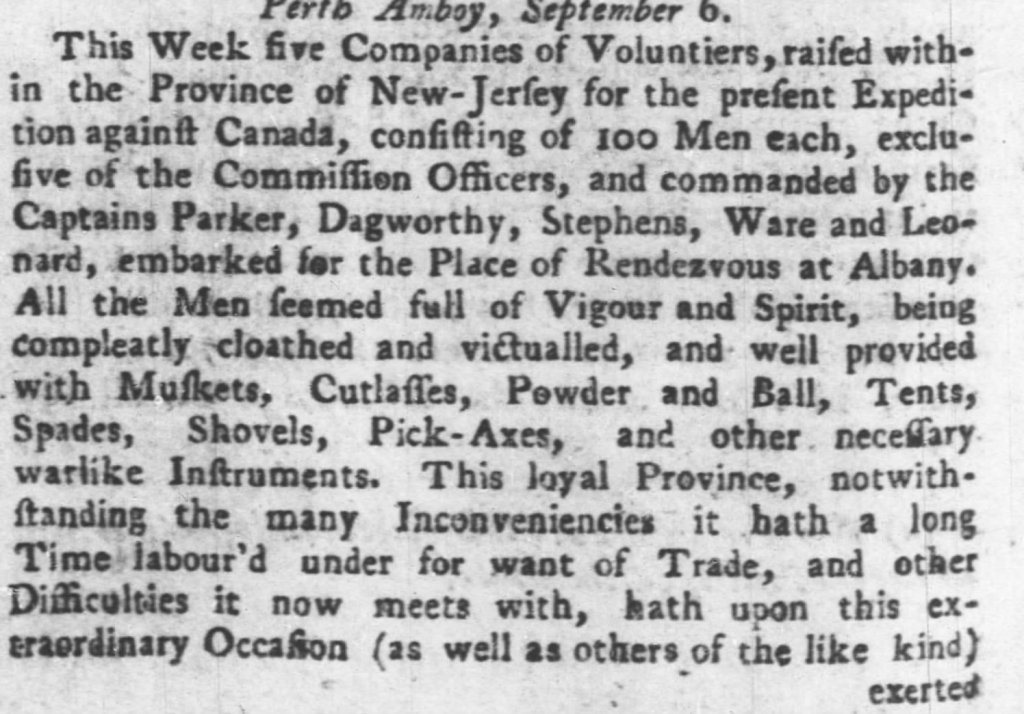
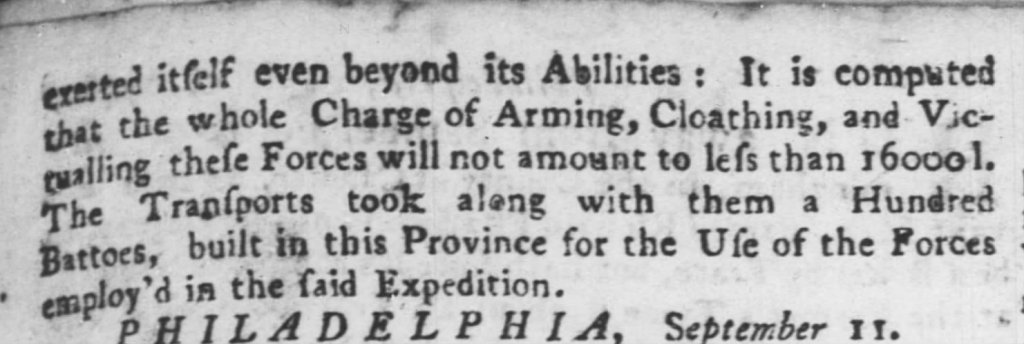
I have found no documents indicating where Robert Leonard was prior to February 1755. I’m inclined to suspect that his service with Dagworthy began prior to that date. If so, it’s possible he was among Maryland soldiers raised in the fall of 1754 to serve with Dagworthy in guarding the frontier. Or did he come to Maryland from New Jersey with Dagworthy prior to 1754? When New Jersey raised its regiments in 1746 for the expedition to Canada, with Dagworthy commanding one of the companies of volunteers, another company was raised under the command of Captain Henry Leonard.[15] A notice in the Pennsylvania Gazette on 11 September 1746 states that five companies of 100 men had been raised in New Jersey for an expedition to Canada and had embarked for Albany.[16] The five captains of these companies are named by surnames: they include Dagworthy and Leonard.
Captain Henry Leonard was born in 1715, probably in Shrewsbury township, Monmouth County, New Jersey, son of Henry Leonard and Sarah Morford. Captain Henry’s father Henry was born about 1668 in Massachusetts and died after 17 April 1739 in Shrewsbury township.[17] The Leonard family of Monmouth County, New Jersey, included a number of military men in its first generations in New Jersey, including two first cousins of Captain Henry who were Loyalists during the Revolution, brothers John and Thomas Leonard, both of whom ended up in Nova Scotia.[18]
I have no information showing that Robert Leonard, serving with Dagworthy at Fort Cumberland by February 1755, is in any way connected to the Henry Leonard who served alongside Dagworthy in King George’s War in 1746. It may well be coincidental that two military men with the Leonard surname had ties to Dagworthy in the period 1746-1755. Still, for anyone trying to find records of Robert Leonard prior to February 1755, I think it’s worth keeping in mind that Dagworthy had at least one connection to the Leonard family of Monmouth County, New Jersey, in the 1740s.
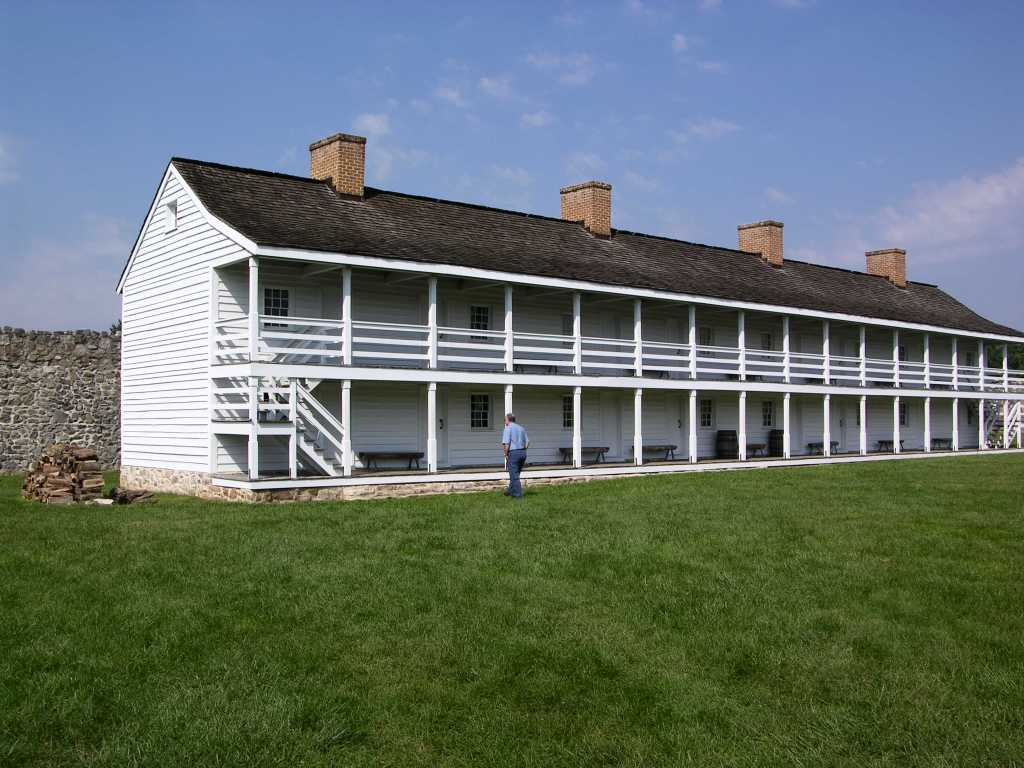
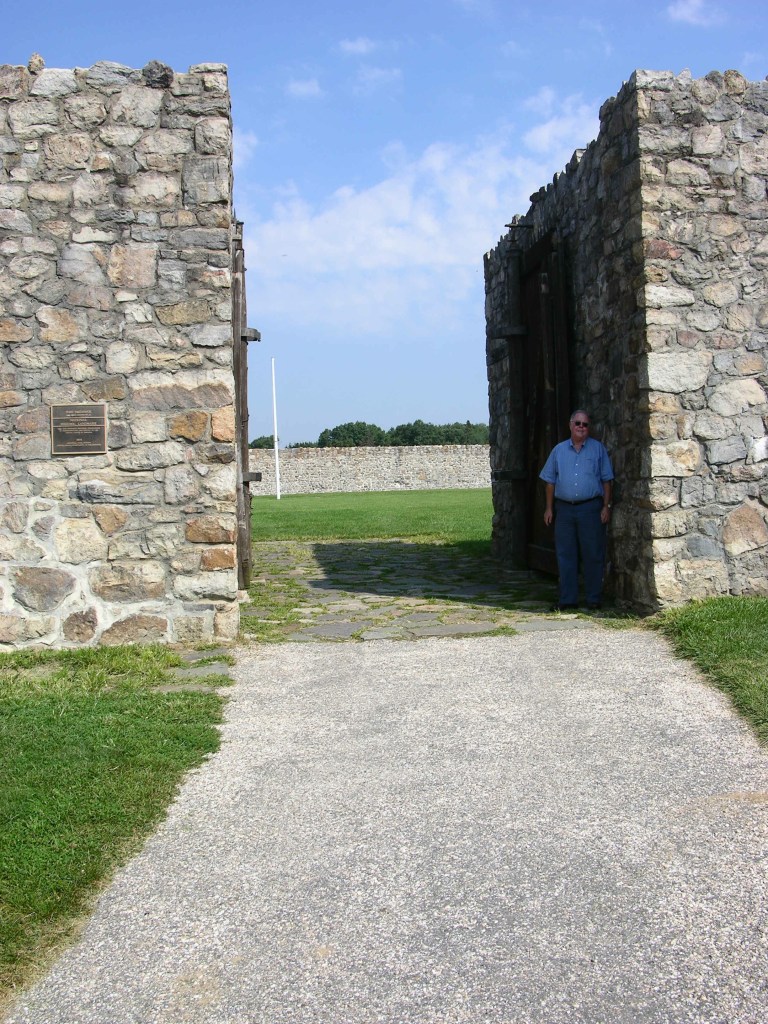
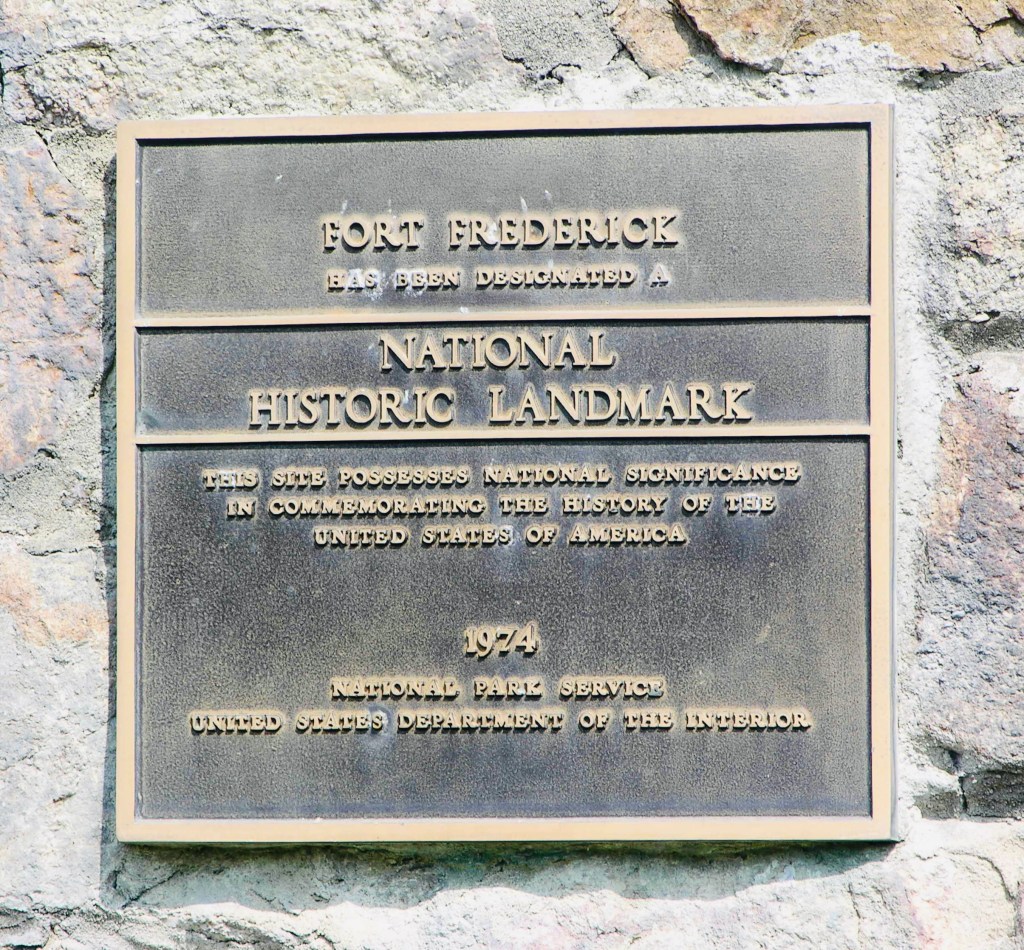
Fort Frederick
As I’ve just indicated, when General Edward Braddock’s campaign to take Fort Duquesne from the French failed disastrously in the summer of 1755, with Braddock being killed in battle along with many of his troops, the Maryland legislature responded by making plans to build another fort in Frederick County, a fort to be named Fort Frederick. The Maryland troops serving with Braddock included Dagworthy’s soldiers. As the previously cited anonymous article in Maryland Historical Magazine providing a roster of Maryland troops in the French and Indian War states,[19]
Braddock’s defeat aroused the Assembly to action, and at the February session of 1756, after much bickering, the sum of £40,000 was voted for His Majesty’s service. At subsequent sessions the Assembly declined to do more than provide for the support of 300 militia, who could not be sent beyond Fort Frederick nor used as a fixed garrison for Fort Cumberland. Captain Dagworthy was given the command of the Maryland troops sent to the frontiers of Frederick County in 1754, and in 1756 took part in the construction of Fort Frederick.
When the new fort was built, Dagworthy was placed in command with the rank of Lieutenant-Colonel, with five hundred men in his battalion.[20]
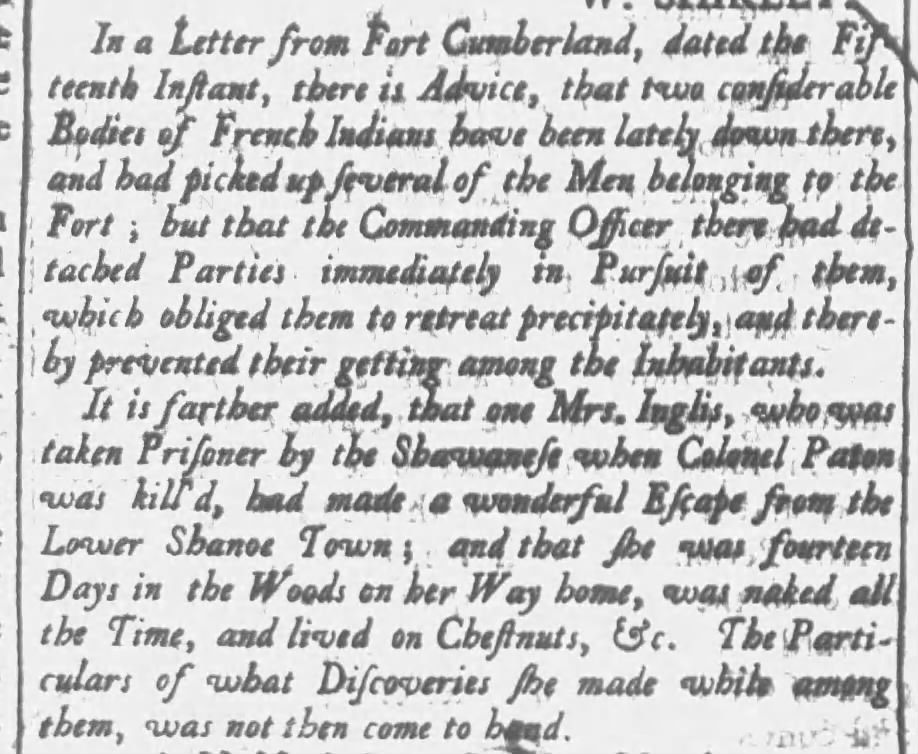
On 11 March 1756, the Maryland Gazette reported,[21]
In a Letter from Fort Cumberland, dated the Fifteenth Inſtant, there is Advice, that two conſiderable Bodies of French Indians have been lately down there, and had picked up ſeveral of the Men belonging to the Fort; but that the Commanding Officer there had detached Parties immediately in Purſuit of them, which obliged them to retreat precipitately, and thereby prevented their getting among the Inhabitants.
In May 1756, the Maryland Assembly passed a supply bill of $40,000 for King’s service and defense of the frontier, with $11,000 designated for construction of a strong fortification. In addition, two companies of Maryland troops, commanded by Captains John Dagworthy and Alexander Beall, were raised, with each company to contain 100 men. Construction of the new fort eighteen miles west of Hagerstown began in June 1756.[22]
Whereas Fort Cumberland had been hastily hobbled together with insubstantial materials, the new fort near Hagerstown was built to last and to provide strong protection against adversaries:[23]
The stone fort, named in honor of Maryland’s Lord Proprietor, Frederick Calvert, Sixth Lord Baltimore, was erected by Governor Horatio Sharpe in 1756 to protect English settlers from the French and their Indian allies. Fort Frederick was unique because of its large size and strong stone wall. Most other forts of the period were built of wood and earth. The fort served as an important supply base for English campaigns…. Fort Frederick saw service again during the American Revolution as a prison for Hessian (German) and British soldiers.
As construction of Fort Frederick was being completed, the Maryland Assembly met from 6 April through 9 May 1757 to pass an act entitled “An Act for his Majesty’s Service, and the more immediate Defence and Protection of the Frontier Inhabitants of this Province”:[24]
It appears, that a Plan has been formed for the better Defence of his Majesty’s Dominions in North-America, and for Annoying his Majesty’s Enemies in these Parts; by which it is proposed, that this Province should raise and support Five Hundred Men, to act in Conjunction with his Majesty’s Regular Forces, in the Defence and for the Security of this Province….
The act goes on to allocate funding for the fort and its troops, stating that funding
[S]hall be applied to the Raising, Cloathing, Paying, Subsisting, and Defraying all Charges and Expences attending the Supporting Five Hundred Men, including Five Captains, Ten Lieutenants, Five Ensigns, Twenty Serjeants, Twenty Corporals, and Five Drummers, to act in Conjunction with his Majesty’s Regular Forces, and under the Command of his Majesty’s General, or the Officer properly authorized for his Majesty’s Service, and the more immediate Protection and Security of this Province.
The act then specified that among those officers whose troops were included in these provisions were Dagworthy and Alexander Beall:
Provided always, and be it further Enacted, That all the Men, now under the Command of Captain Dagworthy, Captain Alexander Beall, and Captain Joshua Beall, which, by the Terms or Conditions of their Enlistment, were obliged to continue in Service longer than the Tenth Day of April, One Thousand Seven Hundred and Fifty-seven, and all the Officers of their respective Companies, shall be held and deemed as a Part of the aforesaid Five Hundred Men, and shall be paid and subsisted according to the Directions of this Act from the said Tenth Day of April.”
Those holding the rank of sergeant, like Robert Leonard, were to receive a shilling and sixpence daily for their service: “To every Serjeant, One Shilling and Six Pence per Day.”
The duties of these troops, the act maintains, were not only to maintain and garrison the fort, but to engage in ranging to assure the safety of inhabitants of the frontier, “with Orders to Range as near the Settlement of the Inhabitants as the Nature of that Service shall require.” Alexander Beall’s troops in particular played a key role in acting as rangers to secure the western parts of Maryland: in 1756, the Maryland Assembly paid Beall “for the support of the ranging parties on the Western Frontier” and to “raise more men for the defense of the frontier regions of Maryland.”[25]
From the time Fort Frederick was built, a steady stream of records shows Robert Leonard serving there as a sergeant under Dagworthy and Beall. Henry C. Peden notes that Robert was stationed at the fort by August 1757.[26] A set of muster rolls with an indexed ledger found in the Calvert Papers, dated 1762, tracks the troops at the fort from 9 October 1757, though it appears some of the men appearing in these muster rolls had been with Dagworthy as early as 1754.[27] Commenting on these muster rolls, the previously cited Maryland Historical Magazine says,[28]
The records from which this roster [of Maryland troops in the French and Indian War, 1757-9] is compiled, consist of 53 muster rolls and an indexed ledger, which is dated 1762. They show service from October 9th, 1757, up to which time the troops had been paid in one of the ways mentioned above; but it is probable that some of the men had been with Captain Dagworthy as early as 1754. These records were most carefully kept in order to secure payment for the men in spite of the Assembly’s refusal to provide for them and final settlement appears to have been made March 16th, 1763. There are twelve rolls each for the companies of Captains John Dagworthy, Alexander Beall, Joshua Beall, Francis Ware, and seven for that of Richard Pearis.
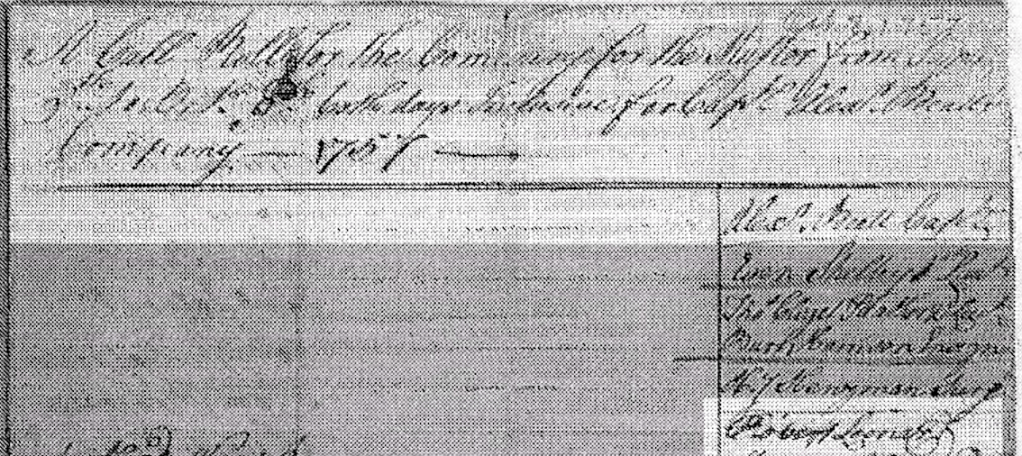
The muster rolls for Alexander Beall’s company show the following:[29]
LEONARD, ROBERT. Sgt. Capt. A. Beall’s co. O. 9, 1757 to F. 16, 1758.
Discharged
According to Murtie J. Clark, the roster of Beall’s company shows Robert Leonard discharged on 8 November 1758.[30]
In addition to this set of records, Frederick County Land Record books in this period of time repeatedly show Sergeant Robert Leonard of Alexander Beall’s company witnessing the discharge of soldiers from Beall’s company:
• On 10 February 1757, Sergeant Robert Leonard and George Barrance witnessed the discharge of John Harris from Beall’s unit.[31]
• On 18 June 1757, Leonard and Barrance witnessed the discharge of William Smith from Beall’s company.[32]
• On 25 and 28 July, the same two men witnessed the discharge of Joseph Hughes and Adam Coonce from the same unit.[33]
• From 4-10 August 1757, several men of the unit recorded their discharges before Leonard and Barrance.[34]
• On 22 November 1758, Leonard and Barrance witnessed the discharge of William Kimbol from Beall’s company.[35]
• On 22 March 1759, Robert Leonard witnessed the discharge of Henry Petner from Beall’s unit.[36]
According to Henry Peden, a payment to Robert Leonard dated 7 March 1763 appears on Colonel Dagworthy’s account book.[37] This payment postdates his period of service in the British 35th Regiment of Foot from some point prior to 13 September 1759, when the battle of the Plains of Abraham took place, to 24 July 1762, when he was discharged from this military unit. It does not necessarily mean, I think, that Robert had continued serving under Dagworthy up to March 1763, only that he received a payment for some reason from Dagworthy on that date, and must have returned to Maryland after his discharge in Havana in July 1762 from the 35th.
During the years in which Robert Leonard served in Alexander Beall’s company under Dagworthy’s command at Fort Frederick, soldiers garrisoned at the fort were among those suffering severe defeat with Major James Grant in the battle of Fort Duquesne on 14 September 1758; the Fort Frederick troops then lost a number of men at the battle of Fort Ligonier on 12 October 1758; and troops from Fort Frederick were present at the occupation of Fort Duquesne on 25 November 1758.[38] It seems to me very likely that Robert Leonard took part in some or perhaps all of these military actions.
Some Notes about Alexander Beall
Robert Leonard’s commanding officer at Fort Frederick, Captain Alexander Beall, was born about 1712 in Prince George’s County, Maryland, and died about May 1759 in Frederick County. His father William Beall (1684-1756) was the son of Alexander Beall, (1649-1744), an immigrant from Fifeshire, Scotland, to Maryland. William Beall (whose wife was Elizabeth Magruder) was a substantial landowner in Frederick County, some of whose descendants intermarried with members of the Massachusetts Leonard family that moved to Monmouth County, New Jersey, and are discussed above.[39]
A virtual tour of Fort Frederick barracks provided by online by Maryland Park Service offers a glimpse of the captain’s quarters at the barracks, observing,[40]
The senior officer of the fort would have had the most spacious and luxurious quarters in the Governor’s House. The commander at Fort Frederick was typically Capt. Alexander Beall. Because he was an officer, his furnishings, clothing, accoutrements, etc. were paid for at his own expense. Therefore, the quality could vary at his discretion, although the quality and quantity of his possessions would be far superior to the companies’ enlisted men.
It’s interesting to note that the 9 April 1759 will of Alexander Beall in Frederick County shows him owning part of a large tract of land in Frederick County that bore the name King Cole.[41] The will stipulates that King Cole, a parcel of 246½ acres, was to go to Beall’s son Magruder. The original King Cole tract consisted of 1,970 acres patented to Henry Crabb on 30 August 1754.[42] By 1783, some fifty acres of the King Cole tract belonged to Joseph James, whose sister Hannah married Thomas Leonard (1752-1832), son of Robert Leonard and Honor Pritchard.[43] James obtained the land from his father-in-law James Austin. On 12 April 1791, Joseph sold this land to his father Griffith James, who then sold it along with James Austin on 3 March 1792.[44] This Frederick County land fell into Washington County at the creation of that county in 1776.
Some Notes about Joseph Chapline and Fort Frederick
In a previous posting, I noted the role played in the construction of Fort Frederick by Joseph Chapline (1707-1769), founder of Sharpsburg, where Griffith James lived. The posting I’ve just linked notes that Griffith James, whose daughter Hannah married Robert Leonard’s son Thomas, had ties to Chapline. The first document I’ve found for Griffith James in the Sharpsburg area is a 4 September 1763 agreement that Chapline made with Samuel Beall, David Ross, and Richard Henderson to be partners in an ironworks to be erected in Frederick County.[45] The agreement states that as Chapline made this agreement, he was reserving 215 acres he had sold to Daniel Moore and Griffith James.
Note the name Samuel Beall: Chapline’s business partner Samuel Beall was a first cousin of Captain Alexander Beall, Robert Leonard’s commander at Fort Frederick. Samuel’s father John Beall was a brother of Alexander’s father William Beall. Samuel lived at Hagerstown thirteen miles north of Sharpsburg and close to Fort Frederick. Joseph Chapline helped to finance and support the construction of the fort and was awarded 10,000 acres of land by the Maryland Assembly in 1764 for his role in building the fort.[46] A 1757-8 muster list for Chapline’s militia company in Frederick County shows Richard Dean, whose son Samuel married Griffith James’ daughter Gwendolyn, along with Richard’s sons Thomas and William serving in Chapline’s militia company.[47]
Joseph Chapline served as a surveyor to the Proprietary in 1744, and in 1755 he formed the first company of militia in Antietam Hundred to protect the frontier against Indian raids during the French and Indian Wars.[48] Chapline played such a formative role at Fort Frederick that in the latter part of 1757, local inhabitants of the area around the fort offended by the behavior of some of the British officers stationed there wanted Chapline held responsible for the officers’ misbehavior.[49]
As I’ve also previously noted, the first military company organized for the Revolutionary war in Hagerstown on 6 January 1776, which included Robert Leonard’s son Thomas as well as his brother-in-law Samuel Dean and Samuel’s brother Thomas, was under the command of Joseph Chapline’s son Joseph (1746-1821).
In my next posting, I’ll comment on documents capturing Robert Leonard’s final years of military service as a sergeant in the 7th Maryland Regiment during the Revolutionary War.
[1] Frederick County, Maryland, Land Record Bk. E, pp. 659-660.
[2] See Will H. Lowdermilk, History of Cumberland, Maryland, etc. (Washington, D.C.: Anglim, 1878), p. 278; and J. Thomas Scharf, History of Western Maryland, etc. (Philadelphia: L.H. Everts, 1882), p. 108. Lowdermilk says that a Benjamin Tomlinson was among the earliest settlers of Cumberland, Maryland, and built a house on Will’s Creek in 1789 five miles out from the town.
[3] Reuben Pownall Ely, et al., An Historical Narrative of the Ely, Revell and Stacye Families Who Were among the Founders of Trenton and Burlington in the Province of West Jersey 1678-1683, with the Genealogy of the Ely Descendants in America (New York, Chicago: Fleming H. Revell, 1910), pp. 183-193. See also John and Joyce Stroman Ely at Web Family Card site.
[4] Ely, Historical Narrative of the Ely, Revell and Stacye Families, p. 184, citing New Jersey Archives, vol. VI, p. 424.
[5] Ely, Historical Narrative of the Ely, Revell and Stacye Families, p. 185.
[6] Ibid.
[7] A Gentleman Officer at Fort Frederick, “The Material Culture of the Maryland Troops, Standards and Guidelines for Portraying a Member of the Fort Frederick Provincial Garrison 1756-1759,” at Friends of Fort Frederick website.
[8] See Lee Offen, “A Timeline of Maryland Forces from 1754 to 1764,” at Academia. This essay is also found at Offen’s History Reconsidered website.
[9] Maryland Gazette (Monday, 26 September 1754), p. 3, col. 1.
[10] Maryland Gazette (Thursday, 3 October 1754), p. 3, col. 2.
[11] Jared Sparke, The Life of George Washington (Boston, 1839; repr. Boston: Little, Brown, 1857), p. 71.
[12] “French and Indian War, Roster of Maryland Troops 1757-1759 [CALVERT PAPERS],” Maryland Historical Magazine 5,3 (September 1910), pp. 271-2.
[13] Patrick H. Stakem, Fort Cumberland, Global War in the Appalachians: A Resource Guide, 2nd edn. (2014), p. 14.
[14] Offen, “Timeline of Maryland Forces from 1754 to 1764.”
[15] See Joseph F. Folsom, “Colonel Peter Schuyler at Albany, Proceedings of the New Jersey Historical Society, n.s. 1,3 (July 1916), p. 162; and “Proceedings of the Council of New Jersey, 19 March 1747,” in Documents Relating to the Colonial History of the State of New Jersey, ed. William A. Whitehead, ed., in New Jersey Historical Society, Archives of the State of New Jersey, vol. 6, series 1: 1738-1747 (Newark: Daily Advertiser, 1882), p. 425.
[16] Pennsylvania Gazette (11 September 1746), p. 2, col. 3.
[17] See Brad Leonard, “Descendants of Henry Leonard 1618 – 1678, Ironworker, of Massachusetts and New Jersey”; Bill Barton, “Leonard Siblings Henry, James, Philip, Sarah & Thomas in America and Some of Their Descendants”; and S. Falsey for Brad Leonard, “Leonard Genealogy, Leonards in America and Their Origins.”
[18] See William Stockton Hornor, New Jersey, This Old Monmouth of Ours (Freehold, New Jersey: Moreau Brothers, 1932), pp. 209-210; O.B. Leonard, “The Leonard Family In New Jersey,” Monmouth Inquirer (8 and 15 November 1883); Edwin Salter, “Genealogical Records of the First Settlers of Monmouth and Ocean Counties and their Descendants,” in A History of Monmouth and Ocean Counties (Bayonne: F. Gardner and Sons, 1890), p. xxvii; Fanny Louise Koster, Annals of the Leonard Family (New York, 1911), pp. 195-6.
[19] “French and Indian War, Roster of Maryland Troops 1757-1759,” p. 271.
[20] Ely, Historical Narrative of the Ely, Revell and Stacye Families, p. 187.
[21] Maryland Gazette (Thursday, 11 March 1756) p. 3, col. 2.
[22] “Col. Washington’s Frontier Forts,” at website of Col. Washington’s Frontier Forts Association.
[23] “Fort Frederick State Park” at the website of Maryland State Parks. A virtual tour of the fort is available at “Fort Frederick Barracks Virtual Tour,” at the website of Maryland Department of Natural Resources, Maryland Park Service. For a visually rich essay capturing how Dagworthy’s troops at Fort Frederick were clothed, see Gentleman Officer at Fort Frederick, “The Material Culture of the Maryland Troops, Standards and Guidelines for Portraying a Member of the Fort Frederick Provincial Garrison 1756-1759.”
[24] Proceedings and Acts of the General Assembly, 1757-1758, vol. 55, “Acts of the Assembly Passed in April and May 1757,” pp. 119f.
[25] Henry C. Peden Jr., Marylanders and Delawareans in the French and Indian War 1756-1763 (Lewes, Delaware: Colonial Roots, 2004), p. 16.
[26] Ibid.
[27] The original Calvert Papers, consisting of family papers and other documents, is held by Maryland Historical Society of Baltimore. They are available as well on 32 reels of microfilm at the National Archives.
[28] “French and Indian War, Roster of Maryland Troops 1757-1759,” p. 272.
[29] Ibid., p. 281.
[30] Murtie J. Clark, Colonial Soldiers of the South, 1732-1774 (Baltimore: Genealogical Publishing Company, 1983), pp. 79-81.
[31] Frederick County, Maryland, Land Record Bk. G, p. 155. This discharge was not recorded until 21 August 1761, hence its appearance in Record Bk. G and not F.
[32] Frederick County, Maryland, Land Record Bk. F, p. 252.
[33] Ibid., pp. 291, 296.
[34] Ibid., p. 297.
[35] Ibid., p. 579.
[36] Ibid., p. 658.
[37] Peden, Marylanders and Delawareans in the French and Indian War 1756-1763, pp. 28, 65, 135, 157, 177, 185, 187, 201, 245, 295, and 361.
[38] “French and Indian War, Roster of Maryland Troops 1757-1759,” p. 272; and Ely, Historical Narrative of the Ely, Revell and Stacye Families, p. 187.
[39] Ernest E. Bell, One Lind of Descent from Our Immigrant Ancestor Alexander Bell/Beall of Maryland (Baywood Park, California, 1995, pp. 5-7, 236-7.
[40] See supra, n. 23.
[41] Frederick County, Maryland, Will Bk. A, p. 127.
[42] See Edward C. Papenfuse and Sarah Patterson, “Dr. Arthur G. Tracey patent/tract index and map locations for Carroll, Frederick, and Washington Counties,” prepared by the Maryland State Archives in October 2009.
[43] See 1783 tax list, Washington County, Maryland.
[44] Washington County, Maryland, Deed Bk. G, pp. 368, 815-6.
[45] Frederick County, Maryland, Land Record Bk. J, pp. 798-802.
[46] Peden, Marylanders and Delawareans in the French and Indian War 1756-1763, p. 64.
[47] Ibid., p. 80. See also Clark, Colonial Soldiers of the South, 1732-1774, pp. 102-3.
[48] See Philip Craycraft, “Joseph Craycraft’,” at his Craycraft Family History site, citing a source entitled “Twigg Family Research Pertaining to the Life and Times of Robert & Hannah Twigg” by Jerry B. Twigg (1996).
[49] See Proceedings and Acts of the General Assembly, 1757-1758, vol. 55, pp. 332-4.


3 thoughts on “Robert Leonard (bef. 1730 – 1780): Documenting His French and Indian War Service in Maryland”