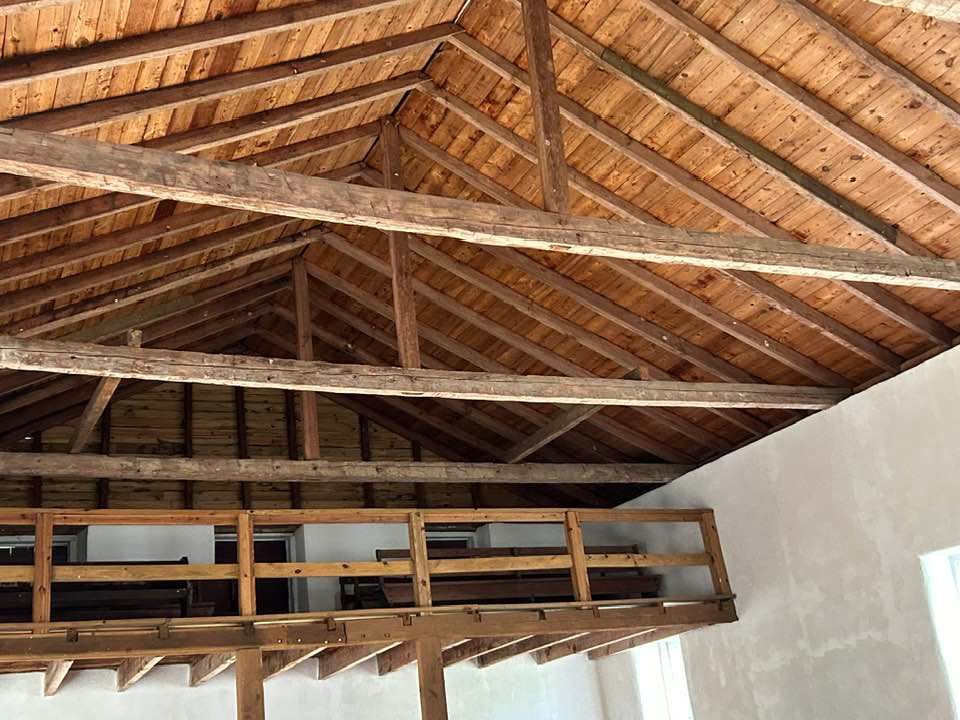
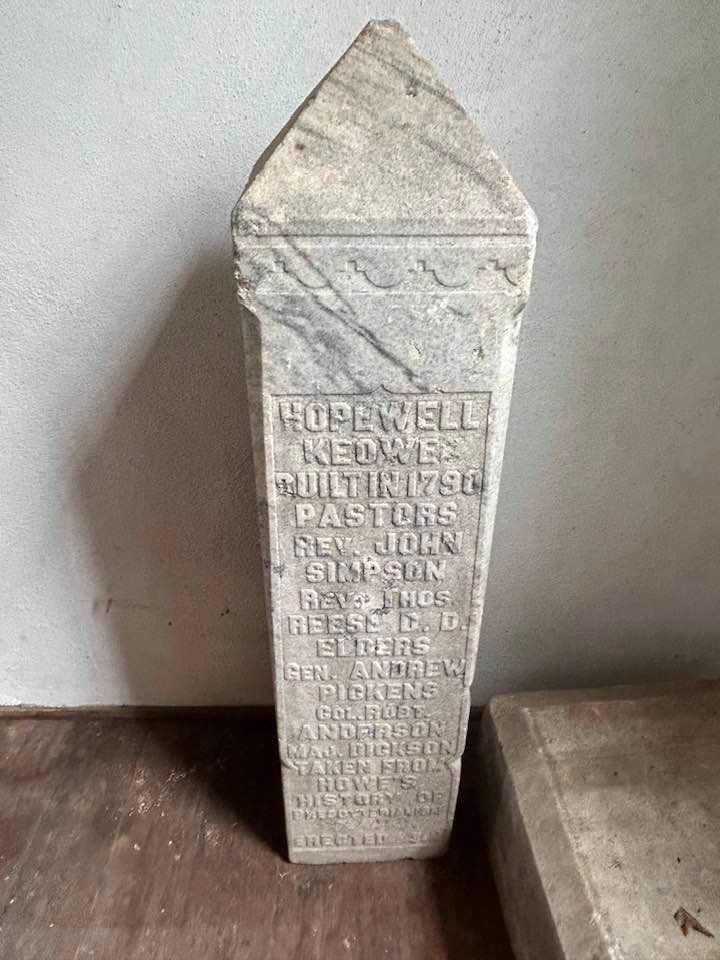
Then in October 1789, Andrew Pickens, his friend and neighbor Robert Anderson and others petitioned the Presbyterian Synod for supplies for Richmond and Hopewell churches, the latter named for Andrew Pickens’ former church in the Long Cane settlement, and the Hopewell Presbyterian Society was established in Pendleton District. In 1790, a log church was built for Hopewell church near the house of Andrew and Rebecca’s son Ezekiel Pickens. When that church burned in 1796, a new church was built of stone, with construction beginning in 1797 under the supervision of Irish stonemason John Rush, who did much of the stonework. This church, which was completed in 1800, became known as the Old Stone Church.
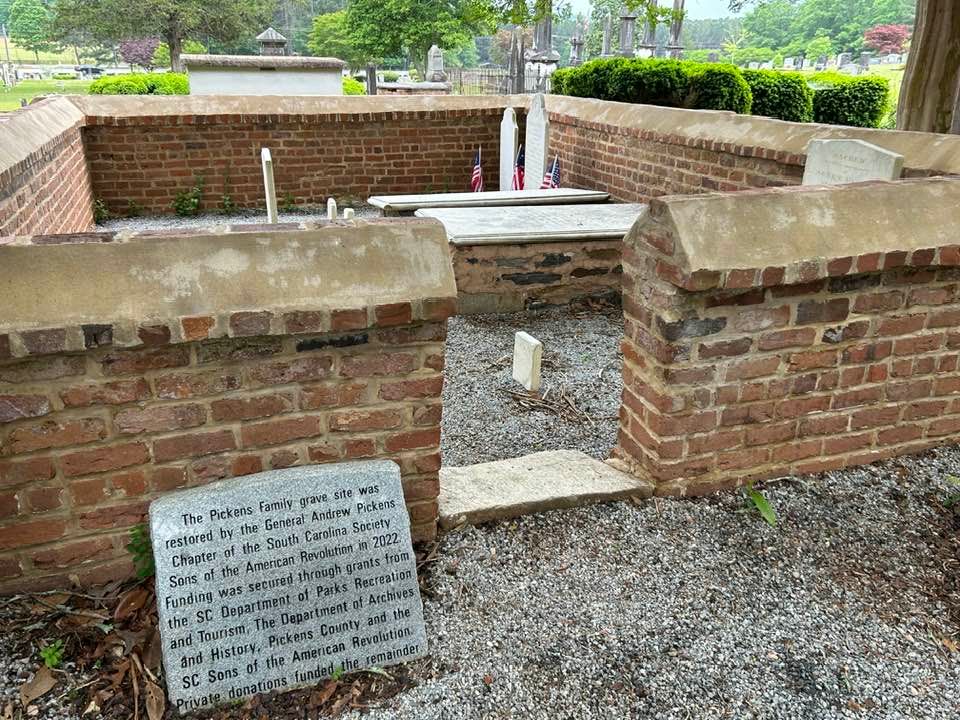
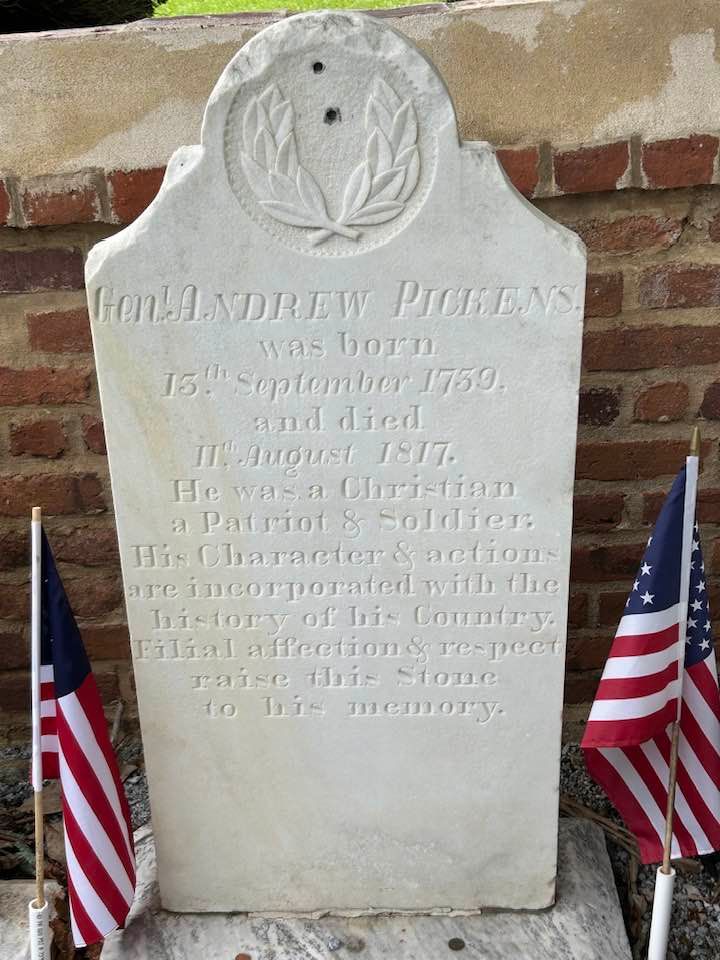
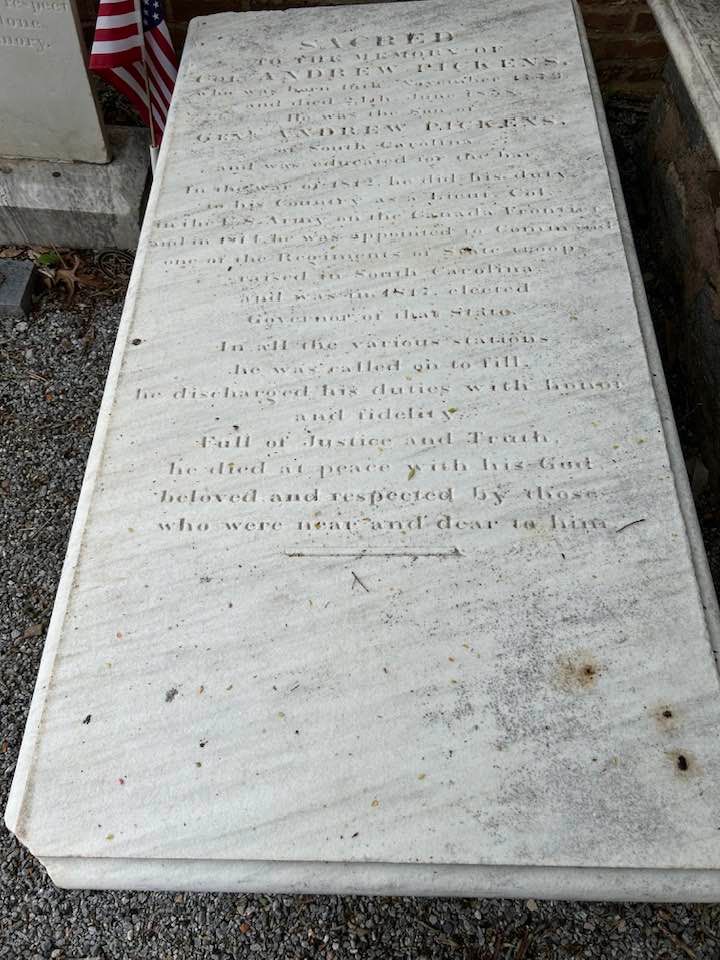
The cemetery of Old Stone Church, in which Andrew and Rebecca Calhoun Pickens and many members of their family are buried, as well as other local luminaries including Robert Anderson, is right across from the church. Andrew and Rebecca are buried in a brick-enclosed plot with other family members. In 2002, the General Andrew Pickens Chapter of the South Carolina Society Sons of the American Revolution restored the Pickens plot, its surrounding wall, and the graves in it. A marker outside the plot notes the various funders of this project.
The following collage of photographs I took on my recent visit to Old Stone Church and its cemetery is intended to complement my previous posting about Andrew Pickens and Rebecca Calhoun:





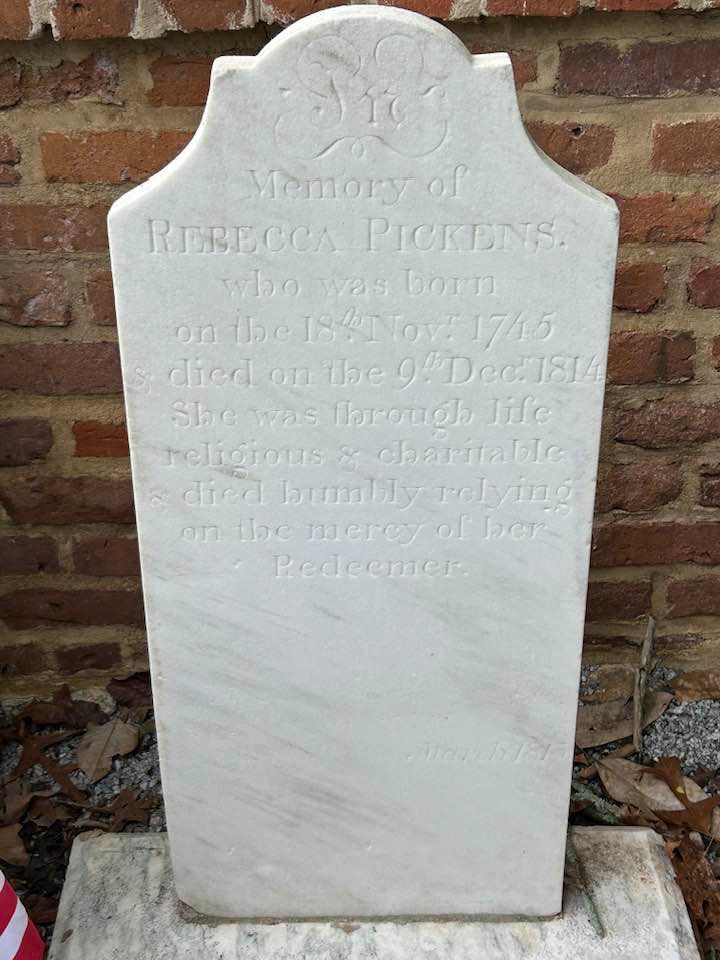

Please note (again): despite countless family trees and other sites online including her Find a Grave memorial page, Rebecca Calhoun was NOT named Rebecca Floride Calhoun. She was plain Rebecca Calhoun. The French given name Floride entered the Calhoun circle forty-one years after Rebecca Calhoun was born, when her brother John Ewing Colhoun married Floride Bonneau.
 BEGATS AND BEQUEATHALS
2 thoughts on “Andrew Pickens and Rebecca Calhoun: An Old Stone Church Photographic Essay”