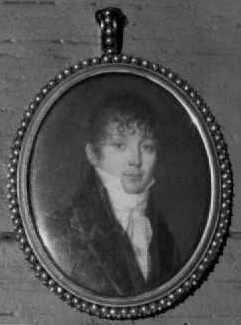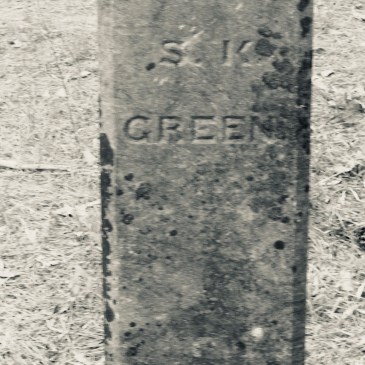
Samuel Kerr Green (1790-1860): The Pointe Coupee Parish, Louisiana, Years and Death in Grimes County, Texas (1848-1860)
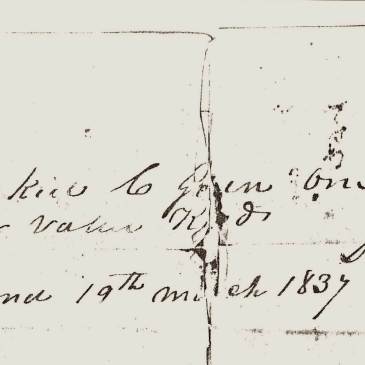
Or, Subtitled: This father’s attempt to bastardize his son “came with a bad grace” since “it is sometimes impossible for a child to know with certainty whether he be legitimately begotten or not” In the previous two postings (here and here), I discussed the life of Samuel Kerr Green during his years in Natchitoches Parish, … More Samuel Kerr Green (1790-1860): The Pointe Coupee Parish, Louisiana, Years and Death in Grimes County, Texas (1848-1860)
Samuel Kerr Green (1790-1860): The Natchitoches Parish, Louisiana, Years, 1835-1848 (2)

Or, Subtitled: “Maj. Samuel K. Green, an old veteran in the cause gave a splendid ball in the evening” So with the previous posting, we’ve gotten Samuel Kerr Green from New Orleans to Natchitoches Parish in northwest Louisiana by October 1835, when he bought 640 acres there from Dr. John Sibley. As the conveyance record … More Samuel Kerr Green (1790-1860): The Natchitoches Parish, Louisiana, Years, 1835-1848 (2)

Samuel Kerr Green (1790-1860): The Natchitoches Parish, Louisiana, Years, 1835-1848 (1)

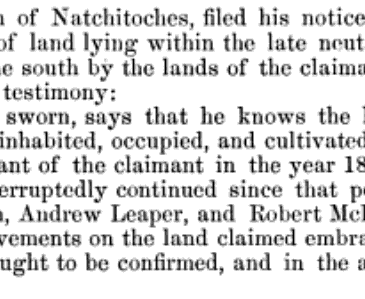
Or, Subtitled: “Claiming, by virtue of occupation, habitation, and cultivation, a tract of land lying wwithin the late neutral territory” As my previous posting about Samuel Kerr Green indicates when it wraps up discussion of the period in the early 1830s that Samuel spent working as an overseer on the plantation of James Hopkins in … More Samuel Kerr Green (1790-1860): The Natchitoches Parish, Louisiana, Years, 1835-1848 (1)

Samuel Kerr Green (1790-1860): The Years Working on James Hopkins’ Plantation in New Orleans, Early 1830s

Two postings in the past, I brought the story of Samuel Kerr Green up to 1830, as I tracked Samuel after he left Nashville and his Nashville-New Orleans trading firm Young, Green and Co. in 1820 or 1821 and went to south Louisiana. When I wrote that posting, I had thought that Samuel went directly … More Samuel Kerr Green (1790-1860): The Years Working on James Hopkins’ Plantation in New Orleans, Early 1830s